Thong Lo vs Ekkamai: luxury living and penthouses compared
A practical comparison of BTS access, food, evenings, buildings and non-overlapping penthouse catalogue samples in Thong Lo and Ekkamai.
· Area Intelligence · 11 min read
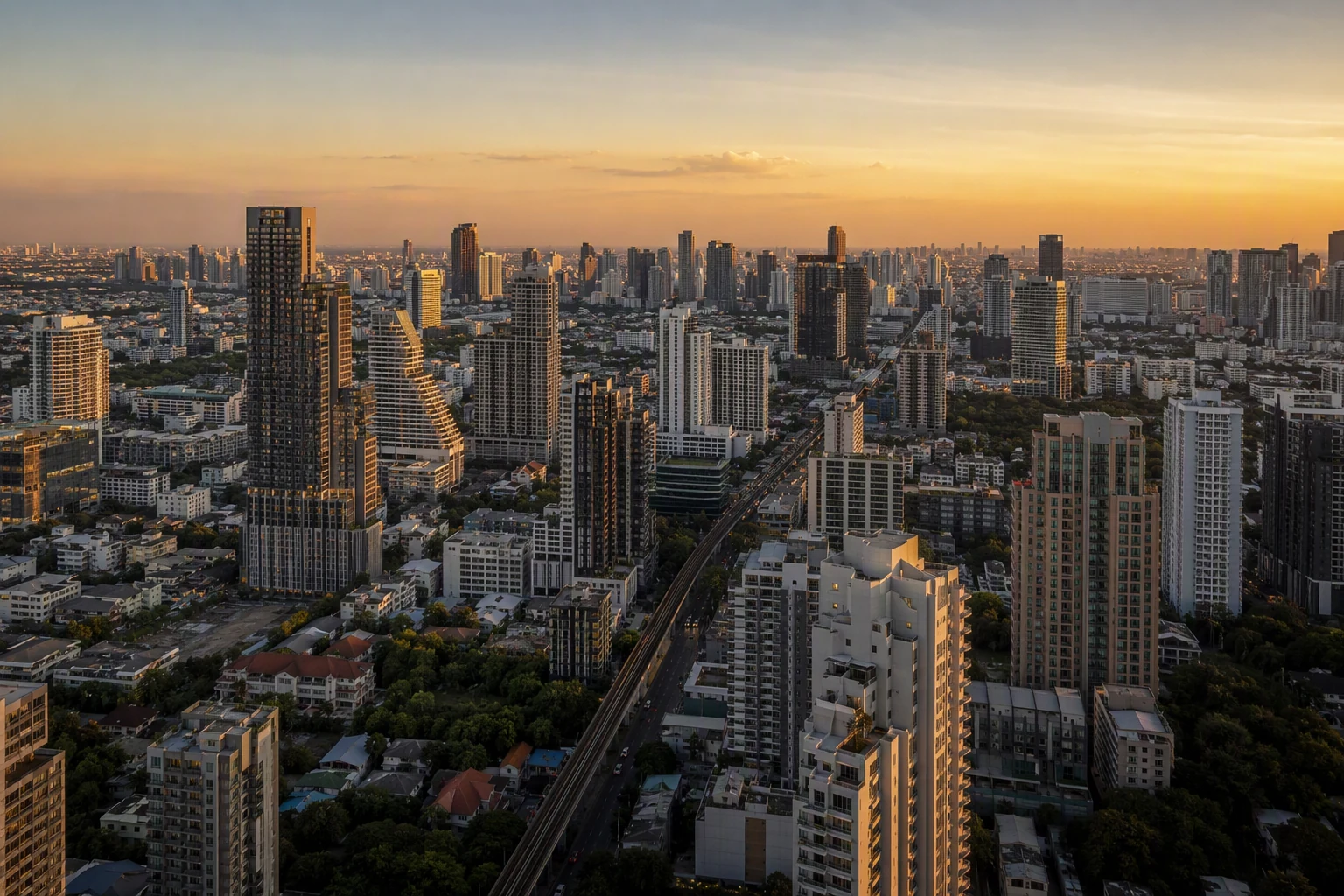
Thong Lo or Ekkamai: the short answer
Begin with Thong Lo if you want to test a home around destination dining, evening plans and a highly specific luxury-building shortlist. Begin with Ekkamai if you want to test a neighboring station-area routine with its own cafes, side streets and residential alternatives. These are starting hypotheses, not personality labels that apply to every street.
Because the two areas sit next to one another on the Sukhumvit corridor, the decision should rarely be based on a generic claim that one is connected and the other is not. Compare the exact building entrance, the route to the station, your most frequent destinations and the unit itself. A superior layout in the right building can outweigh a small difference in the area label.
Explore Thong Lo research records — Start with the catalogue search, then verify the area, exact location and offer attached to each result.
Explore Ekkamai research records — Inspect the current Ekkamai set without treating it as a complete market inventory.
At a glance: close neighbors, different tests
| Decision | Thong Lo | Ekkamai |
|---|---|---|
| Transport anchor | Thong Lo BTS station plus the actual side-street journey. | Ekkamai BTS station plus the actual side-street journey. |
| Lifestyle starting point | Test destination restaurants, evenings and building-based entertaining. | Test cafes, everyday food, local errands and evenings close to home. |
| Resident routine | Work and social journeys across the corridor, with home as a planned destination. | A similar corridor routine, compared through your own street-level observations. |
| Visitor stay | A useful base if the planned itinerary centers on this part of Sukhumvit. | An alternative base to test against the same itinerary rather than a lesser default. |
| Penthouse search | Broader captured sale and rental samples, including very different luxury offers. | Smaller captured samples that should be read property by property. |
| Main warning | A prestigious address does not resolve traffic, noise, layout or management questions. | A lower captured median is not proof of better value or a completed-price discount. |
BTS access without the map-pin shortcut
The official BTS system and route map place both Thong Lo and Ekkamai on the Sukhumvit Line. That shared line makes it easy to compare rail journeys on the same map, but it says nothing about the walk from a particular tower, the station entrance you will use, road crossings or the final journey at the other end.
For each candidate, create a route card for work, a frequent social destination, grocery shopping and a late return. Record the complete journey rather than copying a marketing travel time. If a driver, shuttle or motorcycle taxi is part of the plan, record availability, rules and a fallback instead of treating it as a permanent included service.
- Walk from the unit through the lobby to the station entrance at a relevant time.
- Repeat the return journey after dinner and in wet weather where possible.
- Check lift, step, crossing and luggage needs for your own household and guests.
- Save dated route observations and the official map used for planning; verify service changes before travel.
Check the pin before the panorama — Distinguish an area-level marketing location from the actual building entrance.
Restaurants, cafes and the ordinary week
Lifestyle content often turns Thong Lo into a restaurant list and Ekkamai into a cafe list. That can inspire a visit, but it does not establish which area works for your household. Audit the places you would actually use: a weekday breakfast, a quick lunch, everyday grocery shopping, food delivery, a dinner with guests and a late-night fallback.
| Routine | Observation to record | Property question |
|---|---|---|
| Morning | Opening hours, walking route, shade, crossings and your preferred food or coffee. | Can you repeat the routine easily from the exact lobby? |
| Working day | A place for a call or meeting, plus a practical lunch and grocery route. | Does home connectivity and building access support the same routine? |
| Dinner with guests | Reservation requirements, transport home and guest wayfinding. | Are guest entry, lifts and dining or terrace rules workable? |
| Delivery night | Current coverage, handoff instructions and dietary questions answered directly. | Can drivers reach the correct entrance and what are the building rules? |
| Late evening | Observed street activity, sound and your actual return route. | Are bedrooms and shared areas affected at the times you need quiet? |
Build your own food and errands audit — Use your budget, schedule and dietary needs rather than a generic neighborhood rating.
Catalogue evidence without double counting
For this comparison, every captured record is assigned to only one area. Ekkamai is assigned first where the area is Ekkamai or the title contains Ekkamai or Sukhumvit 61. Remaining records are assigned to Thong Lo where the area is Thonglor or the title uses a common Thong Lo or Thonglor spelling. This prevents The Capital Ekkamai–Thonglor from appearing in both calculations.
- Thong Lo median sale asking price
- ฿57.04m — 12 captured sale offers
- Ekkamai median sale asking price
- ฿30m — 5 captured sale offers
- Thong Lo / Ekkamai records
- 20 / 6 — Mutually exclusive area assignment
| Measure | Thong Lo | Ekkamai |
|---|---|---|
| Sale asking median | ฿57.038725m (n=12) | ฿30m (n=5) |
| Sale asking range | ฿27.59m–฿615m | ฿25.9m–฿49m |
| Median asking price / m² | ฿285,484 (n=12) | ฿223,276 (n=5) |
| Advertised monthly rent median | ฿230,000 (n=9) | Not published: only one record |
| Captured monthly rent | Range ฿98,000–฿350,000 | One ฿105,000 record |
The different sale medians do not demonstrate that an Ekkamai home is better value. The samples contain different buildings, unit sizes, finishes, service models and offer positions, and the Ekkamai sample is particularly small. Use the individual source records to form a shortlist and obtain current evidence for any price comparison.
Read the price-type explainer — Keep asking prices, completed transactions and indices separate.
What luxury means at unit and building level
A private lift, large terrace, duplex layout or skyline view can be meaningful, but each feature has practical consequences. Ask whether the lift is truly private, how the levels connect, which areas count in the advertised size, what outdoor maintenance involves and whether the view is from the rooms you will use. Compare these facts across buildings rather than counting feature labels.
| Feature | Useful question | Evidence to keep |
|---|---|---|
| Duplex or multi-level layout | How do bedrooms, stairs and daily movement work for everyone in the household? | Floor plan, current walkthrough and accessible-route review. |
| Private outdoor space | Who maintains it, what is permitted and how does it handle water and sun? | Dimensions, rules, maintenance responsibility and inspection. |
| Skyline or open view | Which rooms benefit and what current or planned obstructions need checking? | Dated unit media and independently reviewed context. |
| Concierge or shared services | Which services are included, charged, bookable or currently unavailable? | Current management answers and fee schedule. |
| Furnished offer | Which exact items transfer and what condition are they in? | Signed inventory and dated condition record. |
| Recurring costs | Which building, utilities, staffing, maintenance and professional costs apply? | Current documents and a synchronized cost worksheet. |
A large asking-price difference can reflect unlike properties. Do not call it a premium or discount until the units and offers are genuinely comparable.
The same-day fieldwork plan for both areas
If you can visit, test both areas on the same day so that weather, your energy and your itinerary are reasonably comparable. If you are abroad, commission a structured live visit and independent professional work rather than asking an agent to declare a winner. Keep the exact unit and offer attached to every observation.
- Begin at a real morning destination and travel to each candidate as you would on a weekday.
- Walk the immediate side street and record access, deliveries, sound and current construction context.
- View the exact unit, not only a showroom, shared facility or another residence in the development.
- Request building rules, area definitions, fee information and included-item lists through a controlled document pack.
- Return or request current evidence for the evening routine before making a final area judgment.
- Have independent advisers review the specific unit, offer and your circumstances before commitment.
Use the remote-buyer checklist — Assign every unanswered question to a person, an artifact and a next action.
Verdict, wider comparisons and sources
Choose Thong Lo when its exact building and your intended dining, social and work routine align better than the Ekkamai finalist. Choose Ekkamai when its exact residence wins on the same evidence—not simply because its captured median is lower. With only six Ekkamai research records, expanding the source set is a research task, not a reason to manufacture a market conclusion.
Zoom out to the Sukhumvit–Riverside decision, or use the coastal guides to compare a very different lifestyle brief. The official BTS references below support the transport context; all asking-price figures are from the dated catalogue sample defined above.
Compare the wider Bangkok choice — Sukhumvit versus Riverside, including transport, visitor routines and catalogue evidence.
- BTS system structure and Sukhumvit Line — BTS SkyTrain
- Current BTS route and fare map — BTS SkyTrain